Start here
Rome gladiator show: worth it?
What the gladiator show on Rome's Appian Way is, who runs it, what it is not and who enjoys it, in plain sentences.
Book the gladiator show ↗Quick answer
Yes, if you want to see how gladiators looked and fought and you are content with a re-enactment, not an ancient site. The ticket covers a museum visit and a show lasting 90 minutes at the Gruppo Storico Romano's headquarters on the Via Appia Antica, which the booking page puts about 3.5 km from the Colosseum. Reviewers praise the performers and the audience participation. Arrange a taxi, and treat the evening as a companion to the Colosseum, not a substitute.
The short answer
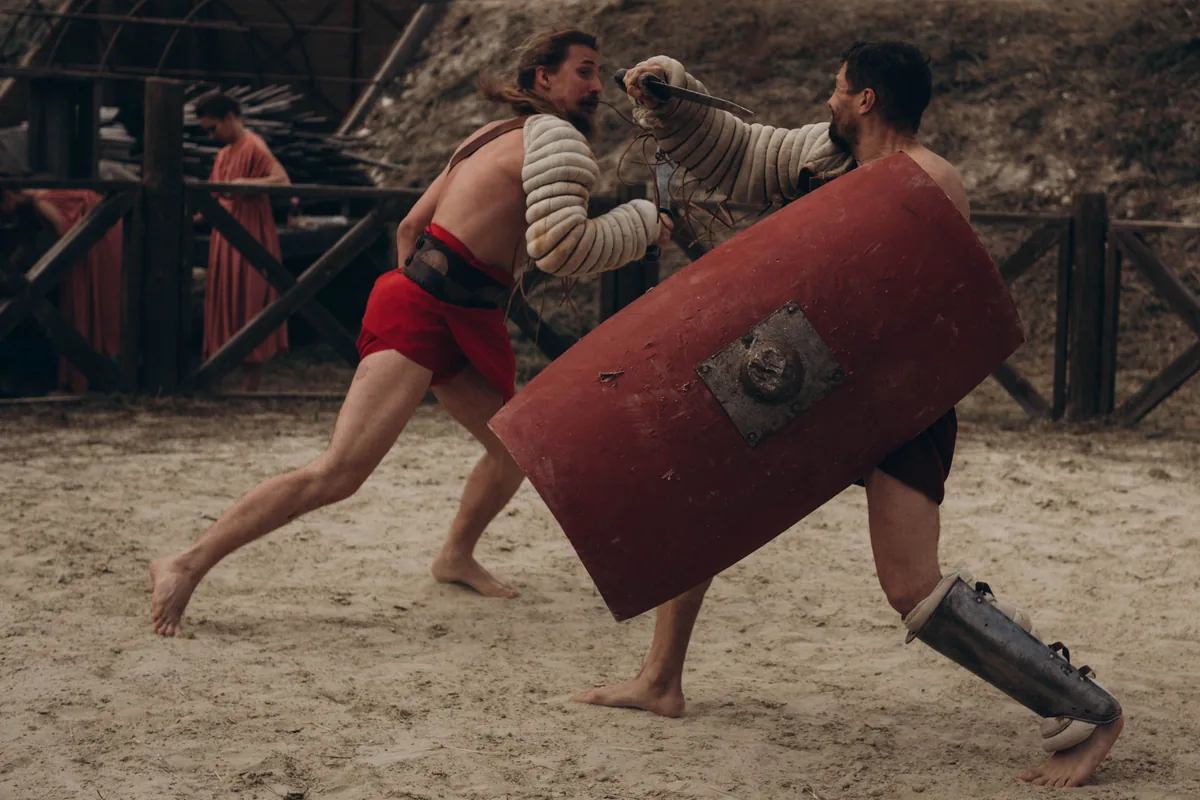
Yes, with one condition: you want a show about gladiators, not a visit to an ancient site. The ticket covers a museum visit and a staged programme in an arena at the headquarters of the Gruppo Storico Romano, a re-enactment association that Turismo Roma describes as a non-profit cultural association founded in 1994. Reviewers on the booking page call the evening engaging and fun, and several mention audience participation. The Colosseum is the original stage of gladiatorial combat, and this evening is a lively companion to it. The sections below set out what the evening contains, how it differs from the Colosseum and who should skip it.
What the booking page promises
The booking page describes a demonstration of a gladiator fight in an equipped arena, with music, lights and effects. It names four kinds of performance: gladiator fights, ancient dances, Vestal rites and pantomime. It says historical re-enactors perform with real weapons and armour, and that photographs are welcome. It also describes a visit to the Museo storico-didattico del legionario romano and a cocktail in the Armory of the Legion. The whole event is given as 90 minutes, and the inclusions line names the museum visit and the show. Start times vary by date.
Who runs it
Turismo Roma says the Gruppo Storico Romano was founded in 1994 and lists sections for the Legion, the Praetorian Guard, Gladiators, the Senate, Vestal Virgins, Theatre, Dance and Music. It says each section carries out experimental archaeology, reconstructing civilian and military life through direct experience. The association's address, Via Appia Antica 18, is also the address of the museum. In plain terms, the people in the arena belong to a society devoted to studying and reconstructing Roman life, which explains why a museum of arms, armour and everyday objects stands beside the arena. That background is also why the evening opens with the museum and not straight in the arena.
What it is not
It is not an ancient arena and not an archaeological visit. The booking page describes an equipped arena at the association's headquarters, while the Colosseum dates from the first century AD: Wikipedia says construction began under Vespasian in AD 72 and was completed in AD 80 under his successor, Titus. It is also not a contest. The performers demonstrate fighting for an audience. Think of the evening as a reconstruction built on research, which shows what a gladiator fight may have looked like, and not as a record of how any single bout went.
What gladiators were
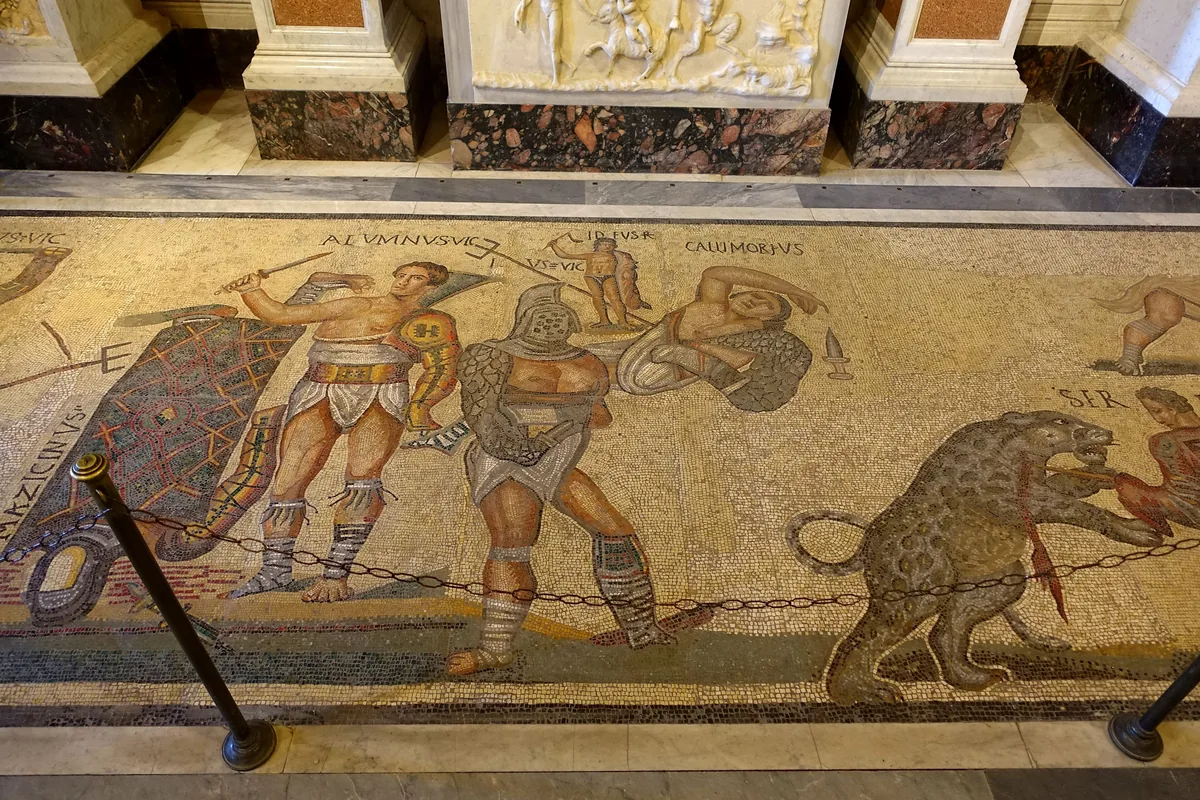
Wikipedia traces gladiatorial combat to funeral games. It says Livy dates the first Roman show to 264 BC, when three pairs fought in the Forum Boarium to honour a dead father. Fighters trained in schools called ludi, run by a lanista, and Wikipedia says all arena performers were legally infames, without full civic rights. Spectators and the editor of the games usually decided whether a beaten man was spared, and Wikipedia gives the risk of death for a defeated gladiator as rising from about one in five to one in four between the early and later empire. A wooden sword, the rudis, marked a gladiator's release.
Read next: How gladiators trained
The types you may see
Wikipedia describes several types. The murmillo carried a large rectangular shield and a short sword, and wore a crested helmet. The retiarius had a net, a trident and a dagger, with an arm guard and a shoulder guard but no helmet. The secutor wore a smooth helmet with two small eye-holes and was trained to face the retiarius. The thraex used a small shield and a curved sword. Which types appear on a given night is for the performers to decide, so read this as background, not as a running order. The guide to gladiator types goes through each one.
Read next: Gladiator types, explained
The Appian Way setting
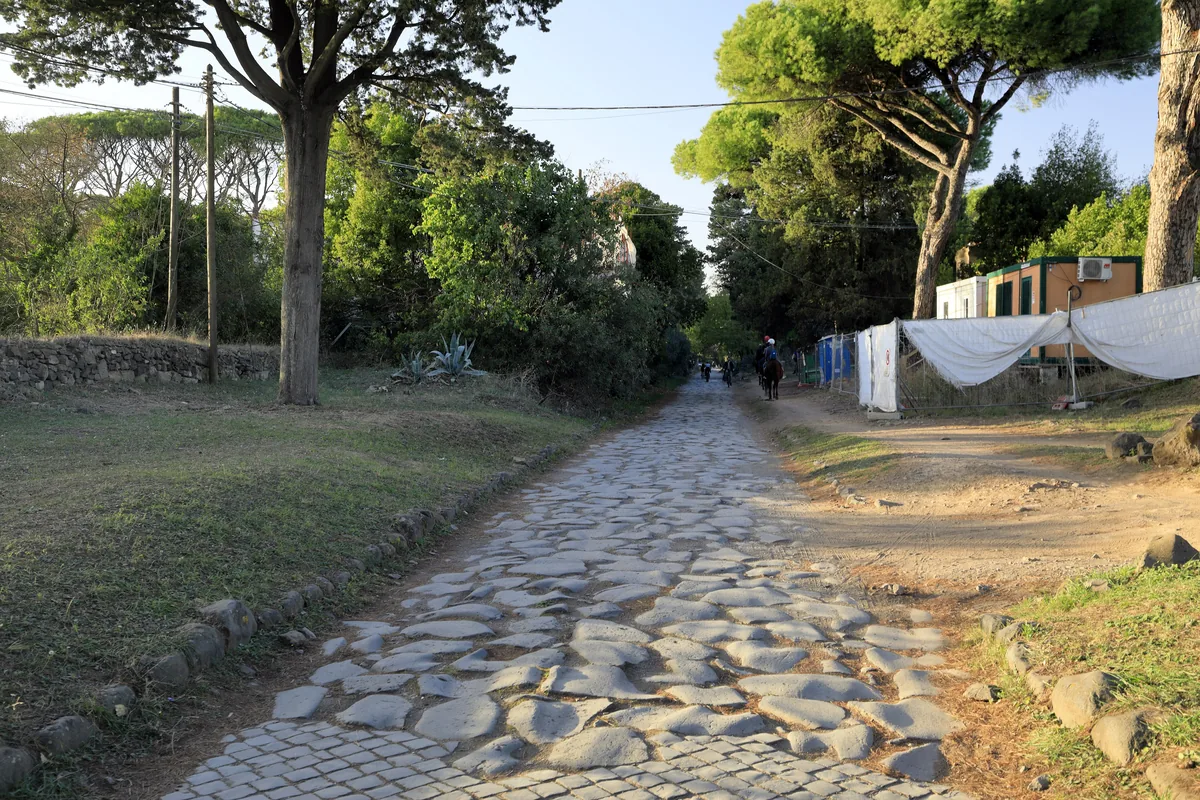
The arena stands on the Via Appia Antica, which Wikipedia says Appius Claudius Caecus began in 312 BC, and which UNESCO inscribed in July 2024 as Via Appia, Regina Viarum. Wikipedia says the Rome stretch lies within the Appian Way Regional Park, a protected area of about 4,580 hectares set up by the Lazio region of aqueducts, villas, mausoleums and catacombs. The setting is a historic road on the edge of the city, not the central tourist zone, which is part of the appeal and the reason you need to plan the trip out. Allow time for the ride out and for the ride back.
Read next: The Appian Way, explained
How it compares with the Colosseum
The Colosseum is the building where, Wikipedia says, gladiatorial contests, animal hunts and staged battles were held, on a wooden floor covered with sand. A Colosseum ticket lets you stand where that happened. This evening shows you people performing what the fighting may have looked like, with the weapons and armour in front of you. The two answer different questions, one about the place and one about the people, and they fit into one trip. The next guide compares them directly and helps you decide which to book first.
Read next: Gladiator show or Colosseum?
Practical things to know
The booking page says shows take place from May to September, so there is no winter evening. It lists wheelchair access. Reviewers say you need a taxi or another vehicle to reach the site, and one says staff ordered taxis when the show ended. Another mentions a car park in front of the entrance, and one notes that the heat dampened the audience's energy, so dress for a warm evening and carry water. The booking page welcomes photographs, so bring a charged phone, and keep your voucher where you can find it.
What reviewers say
Reviewers rate the evening highly, and the booking page's summary describes an engaging gladiator show with passionate staff and audience participation, which travellers call a worthwhile and enjoyable evening. Individual reviewers call it informative and entertaining, say the performers got into character and describe the food and drink as a pleasant surprise. One says the ticket is good value because it includes a generous aperitif at the start. The complaints are practical: transport and taxi coordination and, in one review, the heat, which the reviewer says dampened the audience's engagement.
Who this isn't for
Skip it if you want a guided archaeological visit, if you expect a long theatrical production with a plot, or if you dislike audience participation, which reviewers describe as a feature of the evening. Skip it too if you cannot arrange transport, since the site lies outside the centre. If your time in Rome is a single day, spend it on the Colosseum, the Forum and the Palatine Hill, and keep the gladiator evening for a longer stay. Skip it, finally, if you are travelling in the winter months, since the booking page says shows take place only from May to September.
Frequently asked questions
What is the gladiator show on the Appian Way?
A re-enactment by the Gruppo Storico Romano at its headquarters on the Via Appia Antica. The booking page names gladiator fights, ancient dances, Vestal rites and pantomime, plus a museum visit.
Is it a real ancient arena?
No. It is an equipped arena at the association's headquarters. The Colosseum, which Wikipedia dates to the first century AD, is the ancient arena.
How long does the evening last?
Ninety minutes for the whole event. Start times vary by date and show when you pick one.
When does it run?
The booking page says shows take place from May to September. Check the calendar for the dates on offer.
Do I need a taxi?
Reviewers say you do, or another vehicle, because the site is outside the centre. One says staff ordered taxis after the show.
Can children go?
Reviewers recommend it for families. For age rules, read the booking page before you pay.
Sources